
Introduction
Effective communication is the backbone of a thriving educational community, and primary school newsletters to parents serve as the most vital bridge between the classroom and the home. These weekly or monthly updates ensure that families stay informed about curriculum goals, upcoming events, and student achievements. When schools prioritize high-quality primary school newsletters to parents, they foster a sense of belonging and trust that directly benefits the students’ academic journey. Crafting primary school newsletters to parents requires a thoughtful approach to ensure the content is engaging, readable, and genuinely helpful for busy families. In this detailed guide, we will explore the best practices for designing primary school newsletters to parents that grab attention and encourage active participation. From choosing the right digital tools to selecting the most impactful stories, every element of primary school newsletters to parents plays a role in building a stronger school culture. Let us dive into the essential strategies for creating primary school newsletters to parents that parents actually look forward to reading every single time.
The Importance of Regular Primary School Newsletters to Parents
Consistency is key when it comes to delivering primary school newsletters to parents because it establishes a reliable routine for information exchange. Families often lead hectic lives, so knowing exactly when to expect primary school newsletters to parents helps them manage school-related tasks more efficiently. Regular primary school newsletters to parents reduce the volume of individual queries sent to teachers, saving valuable administrative time for everyone involved. Furthermore, primary school newsletters to parents act as a historical record of the school year, documenting milestones and special celebrations for the community to cherish. By maintaining a steady flow of primary school newsletters to parents, schools demonstrate transparency and a commitment to open dialogue with every guardian. 🏫
Key Elements of Effective Primary School Newsletters to Parents
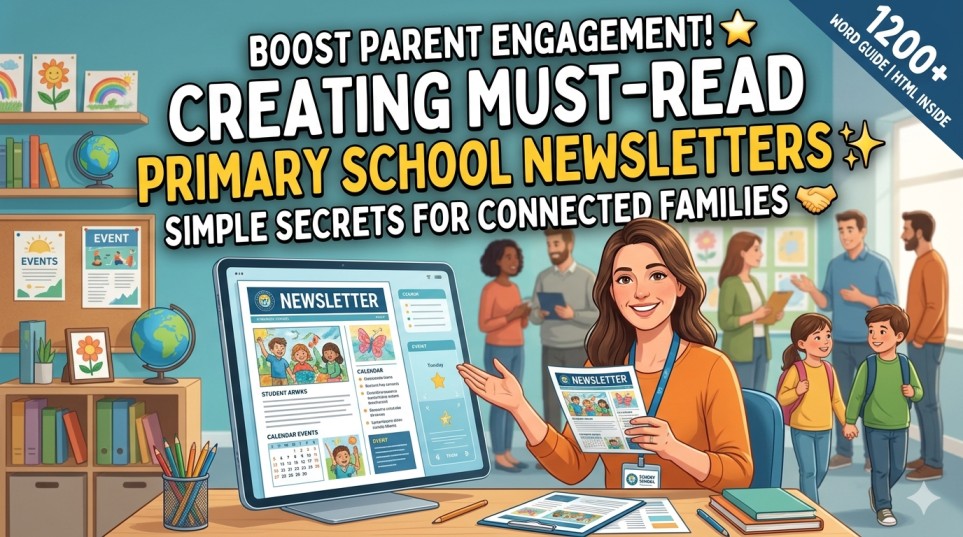
For primary school newsletters to parents to be truly effective, they must include a balanced mix of logistical information and celebratory highlights. A well-structured layout for primary school newsletters to parents ensures that urgent dates and policy changes are easy to spot at a glance. Visuals such as student artwork or photos from field trips bring primary school newsletters to parents to life and make the content feel more personal. It is also helpful to include a “Teacher’s Corner” in your primary school newsletters to parents to provide insight into what children are learning in their specific year groups. Ultimately, primary school newsletters to parents should feel like an invitation to join the school’s mission rather than just a dry list of facts. 📝
Comparison: Content Focus Areas
| Traditional Notices | Modern Newsletter Content |
|---|---|
| Dry Dates | Student Success Stories |
| Policy Text | Learning Activity Photos |
| Generic Notes | Year Group Specifics |
Digital vs. Paper Primary School Newsletters to Parents
In the modern age, the debate between digital and paper primary school newsletters to parents continues, though many schools are now moving toward eco-friendly online versions. Digital primary school newsletters to parents offer the advantage of clickable links, embedded videos, and instant delivery to a parent’s smartphone or email. On the other hand, paper primary school newsletters to parents can be pinned to a fridge as a physical reminder for families who prefer tactile information. Many institutions find success with a hybrid model, offering digital primary school newsletters to parents primarily while keeping a few printed copies available in the front office. Regardless of the format, the goal remains the same: ensuring primary school newsletters to parents reach every household regardless of their technological access. 💻
Comparison: Delivery Platforms
| Method | Primary Benefit |
|---|---|
| Email PDF | Widely Accessible |
| School App | Direct Push Notifications |
| Printed Sheet | Physical Visual Reminder |
How to Write Catchy Headlines for Primary School Newsletters to Parents
The success of primary school newsletters to parents often hinges on whether the subject line or headline captures the reader’s interest immediately. Instead of using generic titles, try using specific and exciting headings in your primary school newsletters to parents to entice parents to click. For example, “What’s Happening in Year 3?” is much more engaging in primary school newsletters to parents than just “Monthly Update.” Using active verbs and positive language within primary school newsletters to parents helps set an optimistic tone for the entire school community. Remember that primary school newsletters to parents are a marketing tool for the school’s values, so make every headline count toward that vision. 📣
Involving Students in Primary School Newsletters to Parents
One of the best ways to increase engagement with primary school newsletters to parents is to give students a voice within the pages. Including “Student Reporters” in your primary school newsletters to parents allows children to describe their school experience in their own unique words. Parents are much more likely to read primary school newsletters to parents thoroughly if they know their child’s work or quotes might be featured. This practice not only makes primary school newsletters to parents more interesting but also provides students with a real-world writing opportunity. When children feel ownership over primary school newsletters to parents, the connection between the classroom and home is naturally strengthened. 🧑🎓
Comparison: Student Contribution Ideas
| Activity | Impact on Engagement |
|---|---|
| Book Reviews | Encourages Peer Literacy |
| Art Gallery | High Visual Appeal |
| Sport Reports | Celebrates Teamwork |
Managing the Calendar in Primary School Newsletters to Parents
A central feature of all successful primary school newsletters to parents is a clear, easy-to-read calendar of upcoming events and deadlines. Primary school newsletters to parents should always highlight non-uniform days, parent-teacher meetings, and seasonal holidays well in advance. Using bold text or color-coding within primary school newsletters to parents can help distinguish between different types of school activities. It is also a good idea to include a “Save the Date” section in primary school newsletters to parents for long-term events happening later in the term. By keeping the calendar organized, primary school newsletters to parents help reduce parent anxiety and ensure high attendance at school functions. 🗓️
Practical Design Tips for Primary School Newsletters to Parents
You don’t need to be a professional graphic designer to create beautiful primary school newsletters to parents that look professional and inviting. Using a clean template for your primary school newsletters to parents ensures that the text isn’t overcrowded and is easy for people to skim on the go. White space is your friend in primary school newsletters to parents, as it helps the most important information stand out from the rest. Stick to two or three consistent fonts in your primary school newsletters to parents to maintain a cohesive and recognizable brand identity for the school. High-quality images are always better than blurry ones, so take the time to snap clear photos for your primary school newsletters to parents. 🎨
Comparison: Design Elements
| Element | Effectiveness Factor |
|---|---|
| Bullet Points | High Scannability |
| Short Paragraphs | Easier Mobile Reading |
| School Logo | Brand Recognition |
Language and Tone in Primary School Newsletters to Parents
The tone of primary school newsletters to parents should always be warm, inclusive, and professional without being overly formal or full of jargon. Using simple English in primary school newsletters to parents ensures that all families, including those who speak English as a second language, can understand the content. Avoid using educational acronyms in primary school newsletters to parents that might confuse someone who doesn’t work in a school environment every day. Instead, use friendly language in primary school newsletters to parents that sounds like a helpful neighbor sharing exciting news. A positive and encouraging voice in primary school newsletters to parents helps build a partnership between teachers and guardians for the benefit of the child. 😊
Measuring the Success of Your Primary School Newsletters to Parents
To keep improving, it is helpful to occasionally track how many people are actually interacting with your primary school newsletters to parents. If you use digital primary school newsletters to parents, you can check open rates and click-through rates to see which sections are most popular. You can also send out a short annual survey to ask families what they would like to see more of in their primary school newsletters to parents. Gathering feedback ensures that primary school newsletters to parents remain relevant and continue to serve the actual needs of the community. Constant small adjustments based on parent feedback will make your primary school newsletters to parents a world-class communication tool over time. 📈
Comparison: Feedback Channels
| Method | Level of Detail |
|---|---|
| Online Polls | Quick Statistics |
| Parent Council | In-depth Discussion |
| Email Replies | Direct Personal Views |
Conclusion
In conclusion, creating high-quality primary school newsletters to parents is an ongoing process that requires creativity, organization, and a genuine love for the school community. When done correctly, primary school newsletters to parents act as a powerful tool for engagement, ensuring that no family feels left out of their child’s education. By focusing on clear communication, student involvement, and attractive design, your primary school newsletters to parents can transform the way the school interacts with the home. Remember that the best primary school newsletters to parents are those that celebrate growth and provide clarity during the busy school weeks. As you move forward, keep experimenting with new content ideas and delivery methods to keep your primary school newsletters to parents fresh and exciting. Thank you for committing to excellence in school communication through your primary school newsletters to parents, which ultimately supports the success and happiness of every student in the building. A well-crafted newsletter is more than just paper or pixels; it is the heartbeat of a connected school family. ✨