

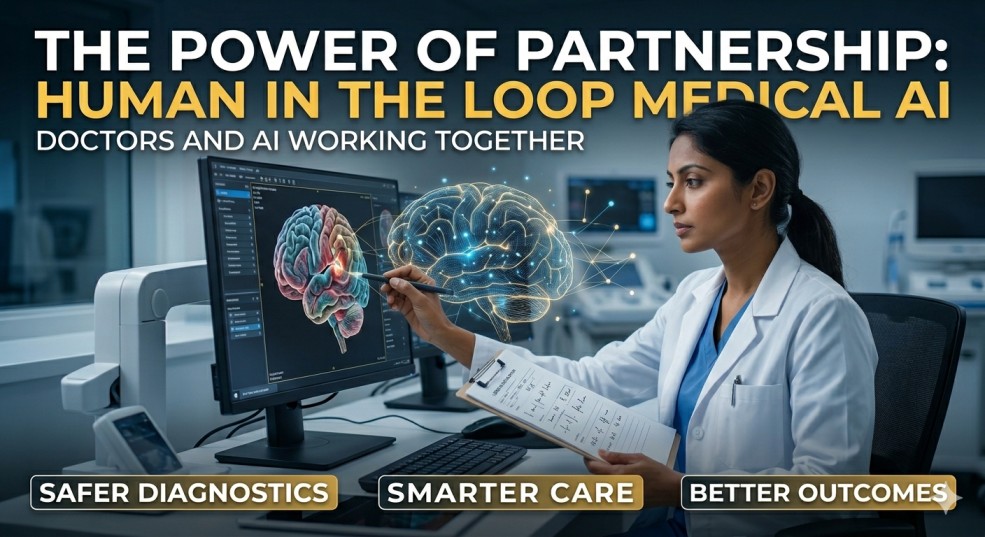
Human in the Loop Medical AI: Balancing Innovation and Human Expertise
Introduction to Human in the Loop Medical AI
The healthcare industry is currently undergoing a massive transformation due to the rise of artificial intelligence. However, the most effective way to implement these technologies is through a framework known as human in the loop medical ai. This approach ensures that while machines handle data processing, human doctors remain the final decision-makers. In the modern clinical setting, human in the loop medical ai acts as a bridge between raw computational power and the nuanced understanding of a medical professional. By keeping a human in the loop medical ai system active, we can reduce errors that often occur when machines operate in isolation. This article explores how human in the loop medical ai is reshaping diagnostics, treatment plans, and patient care. Ultimately, the goal of human in the loop medical ai is not to replace doctors but to provide them with better tools to save lives and improve health outcomes globally.
Understanding the Core Concept of Human in the Loop
At its heart, human in the loop medical ai is about a collaborative relationship. In this model, the “loop” refers to the continuous cycle of data input, algorithmic processing, and human feedback. When we talk about human in the loop medical ai, we are describing a system where the AI learns from human corrections. This constant interaction allows the human in the loop medical ai to become more accurate over time. Without the oversight provided by human in the loop medical ai, algorithms might develop biases or miss subtle clinical signs. Therefore, human in the loop medical ai is essential for maintaining high standards of safety. Every time a radiologist corrects an AI’s finding, they are strengthening the human in the loop medical ai framework.
The Role of Human in the Loop Medical AI in Diagnostics
Diagnostics is perhaps the most visible area where human in the loop medical ai is making a difference. Identifying diseases like cancer or rare genetic disorders requires immense precision, which human in the loop medical ai provides. By using human in the loop medical ai, pathologists can scan thousands of slides quickly while focusing their energy on the most complex cases identified by the software. The human in the loop medical ai system flags potential anomalies, and the doctor confirms them. This synergy within human in the loop medical ai reduces the rate of false negatives. Moreover, human in the loop medical ai helps in triaging patients, ensuring that those with urgent needs are seen first. The reliability of diagnostics has never been higher thanks to human in the loop medical ai.
Comparison: AI Alone vs. Human in the Loop
| System Type | Diagnostic Accuracy |
|---|---|
| Standalone AI | High speed but prone to hallucinations |
| Human in the Loop Medical AI | Highest accuracy with clinical validation |
Enhancing Patient Safety with Human Oversight
Safety is the number one priority in medicine, and human in the loop medical ai is the best way to guarantee it. Algorithms can sometimes “hallucinate” or provide logical answers that are medically dangerous, but human in the loop medical ai prevents these from reaching the patient. By implementing human in the loop medical ai, hospitals create a safety net where every AI suggestion is vetted. The human in the loop medical ai process involves rigorous checks and balances. If an automated system suggests a high dose of medication, the human in the loop medical ai protocol requires a pharmacist or doctor to approve it. This ensures that human in the loop medical ai remains a supportive tool rather than a risky replacement. Trust in technology grows when patients know human in the loop medical ai is being used.
Addressing Data Bias in Healthcare Algorithms
Data bias is a significant challenge in tech, but human in the loop medical ai offers a practical solution. Often, medical data lacks diversity, but a human in the loop medical ai system allows experts to identify when the AI is making biased assumptions. By active monitoring, human in the loop medical ai can be retrained to recognize symptoms across different demographics. The human in the loop medical ai model encourages developers to include diverse viewpoints during the training phase. Without human in the loop medical ai, we risk automating inequality in healthcare. Doctors using human in the loop medical ai can spot these trends and adjust the system’s parameters. Equity in health is a major benefit of the human in the loop medical ai approach.
Comparison: Data Handling Methods
| Method | Bias Mitigation |
|---|---|
| Automated Processing | Passive and often perpetuates bias |
| Human in the Loop Medical AI | Active identification and correction |
Improving Treatment Personalization
Every patient is unique, and human in the loop medical ai excels at creating personalized care plans. While a machine can analyze thousands of similar cases, only human in the loop medical ai can account for a patient’s personal history and lifestyle choices. Through human in the loop medical ai, doctors can use predictive analytics to see which treatments might work best. The human in the loop medical ai then allows the physician to tweak the plan based on the patient’s specific reaction. This level of customization is only possible through human in the loop medical ai. As more data becomes available, the human in the loop medical ai becomes even better at suggesting niche therapies. The future of medicine is personalized, and human in the loop medical ai is the engine driving it.
Comparison: General vs. Personalized Care
| Care Style | Effectiveness |
|---|---|
| Standardized Care | Average results for most people |
| Human in the Loop Medical AI | High success via tailored adjustments |
The Importance of Feedback Loops in AI Training
Machine learning requires constant improvement, and human in the loop medical ai provides the necessary feedback. In a human in the loop medical ai setup, the expert provides “labels” for data that the machine finds confusing. This active learning through human in the loop medical ai saves time and computational resources. Instead of training on millions of random images, the human in the loop medical ai focuses on the most difficult ones. This makes human in the loop medical ai systems much more efficient than traditional black-box models. Furthermore, human in the loop medical ai ensures that the training data remains relevant to current medical standards. As new viruses or diseases emerge, human in the loop medical ai allows for rapid updates to the system. Keeping the human in the loop medical ai updated is a collaborative effort between engineers and doctors.
Ethical Considerations of Medical Artificial Intelligence
Ethics play a vital role in how we use human in the loop medical ai. Who is responsible if a machine makes a mistake? With human in the loop medical ai, the lines of accountability are much clearer. Because human in the loop medical ai requires a person to sign off on decisions, the ethical responsibility remains with the human professional. This structure within human in the loop medical ai protects both the patient and the institution. Furthermore, human in the loop medical ai ensures that patient privacy is respected during data analysis. Ethical guidelines are easier to enforce when human in the loop medical ai is the standard operating procedure. We must continue to discuss how human in the loop medical ai impacts the doctor-patient relationship. Transparency is a core value of the human in the loop medical ai community.
Comparison: Accountability Models
| Model | Responsibility |
|---|---|
| Fully Autonomous | Unclear legal liability |
| Human in the Loop Medical AI | Clear professional accountability |
Challenges in Implementing Human in the Loop Systems
Despite its benefits, implementing human in the loop medical ai is not without its hurdles. One major challenge for human in the loop medical ai is the potential for “alert fatigue” among doctors. If a human in the loop medical ai system flags too many things, the doctor might start ignoring the warnings. Therefore, human in the loop medical ai must be designed to be intuitive and helpful rather than distracting. Another issue is the cost associated with maintaining a human in the loop medical ai infrastructure. Training staff to use human in the loop medical ai properly requires time and investment. However, the long-term savings in lives and efficiency often outweigh these initial human in the loop medical ai costs. Overcoming these barriers is the next step for human in the loop medical ai adoption.
Comparison: Implementation Factors
| Factor | Impact on Efficiency |
|---|---|
| Old Manual Systems | Slow and labor intensive |
| Human in the Loop Medical AI | Fast but requires expert oversight |
Future Trends in Human in the Loop Medical AI
Looking ahead, the evolution of human in the loop medical ai is set to accelerate. We will likely see human in the loop medical ai integrated into wearable devices, allowing for real-time health monitoring with doctor supervision. This expansion of human in the loop medical ai will make healthcare more proactive rather than reactive. Additionally, natural language processing will allow doctors to interact with human in the loop medical ai using simple voice commands. The integration of augmented reality with human in the loop medical ai could also assist surgeons during complex operations. As the technology matures, human in the loop medical ai will become an invisible but essential part of every clinic. The potential for human in the loop medical ai to improve global health is truly limitless. Innovation in human in the loop medical ai is just beginning.
Conclusion
In conclusion, the integration of human in the loop medical ai represents a significant leap forward for the healthcare sector. By combining the speed of algorithms with the wisdom of medical professionals, human in the loop medical ai creates a safer and more efficient environment for patients. We have seen how human in the loop medical ai improves diagnostics, reduces bias, and ensures ethical accountability. While challenges like alert fatigue exist, the benefits of human in the loop medical ai far exceed the drawbacks. As we move further into the digital age, the human in the loop medical ai framework will be the gold standard for all medical technology. It ensures that the “human touch” is never lost in a world of data. Embracing human in the loop medical ai is not just a choice for hospitals; it is a necessity for the future of medicine. Ultimately, human in the loop medical ai empowers doctors to be the best versions of themselves, providing care that is both high-tech and high-touch.