

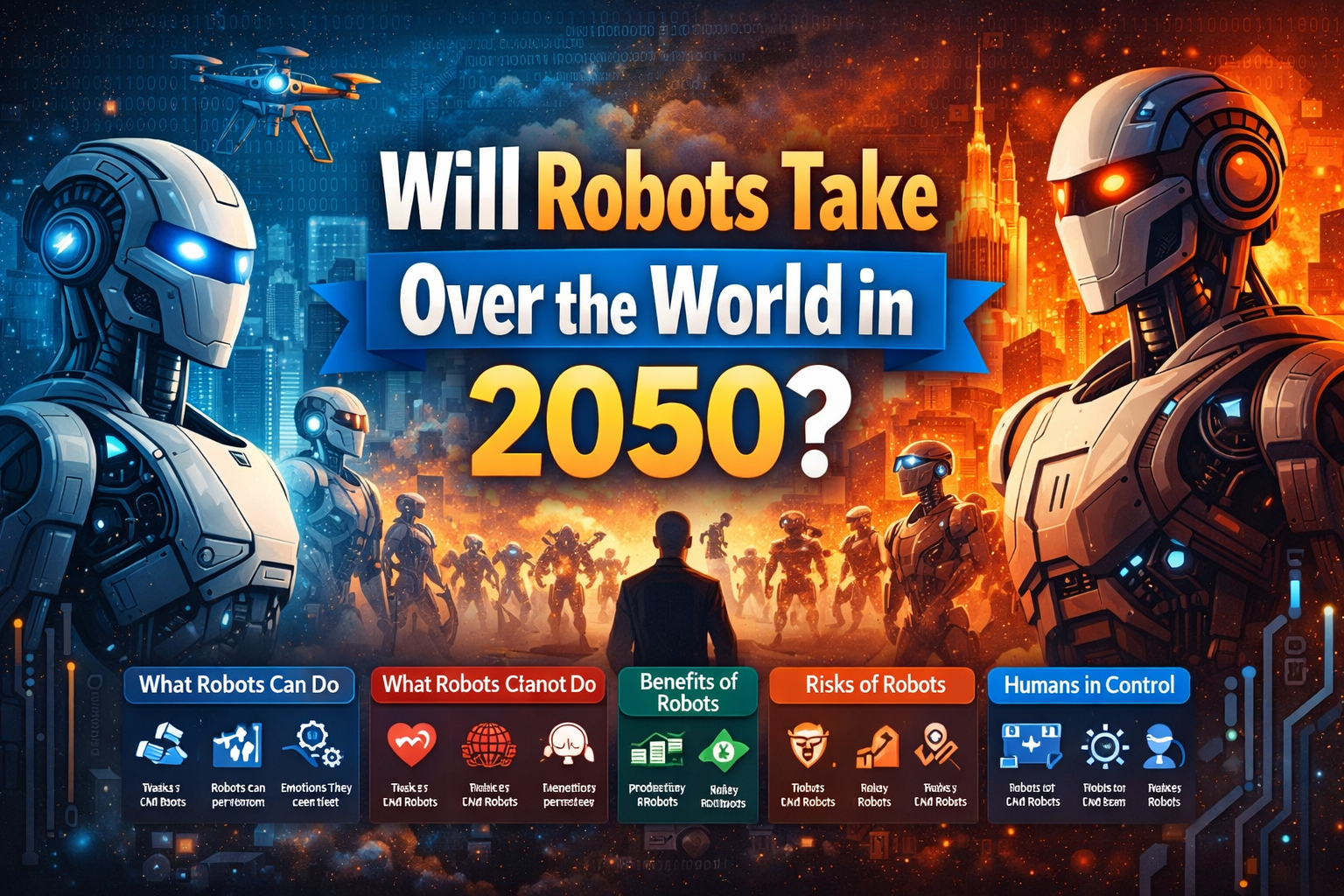
Many people today are curious and even worried about one big question: Will robots take over the world in 2050? As technology continues to grow, robots are becoming smarter and more useful in daily life. From factories to homes, robots are helping humans in many ways. This makes people wonder what the future will look like and whether machines will become more powerful than humans.
When we think about Will robots take over the world in 2050, it is important to understand what robots can actually do. Robots are designed to perform tasks that are programmed by humans. They can follow instructions, learn patterns, and improve performance using artificial intelligence. However, they still depend on human input and control. This means robots do not have their own thoughts or emotions like humans.
Another key point in discussing Will robots take over the world in 2050 is the role of artificial intelligence. AI allows robots to make decisions based on data, but it does not give them full independence. Humans create the systems, set the rules, and control the outcomes. Even the most advanced robots today cannot act without human guidance. So, the idea of robots completely taking over the world is still far from reality.
The question Will robots take over the world in 2050 also depends on how technology is managed. Governments and organizations are working on rules and safety measures to control AI and robotics. These rules are designed to make sure that technology is used in a safe and helpful way. With proper control, robots can support human life instead of replacing it.
Another factor to consider when asking Will robots take over the world in 2050 is the purpose of robots. Most robots are created to solve problems, reduce human effort, and improve efficiency. For example, robots are used in healthcare, manufacturing, and even education. Their main goal is to assist humans, not to compete with them. This shows that robots are more like tools rather than rulers.
People often imagine science fiction scenarios when thinking about Will robots take over the world in 2050. Movies and stories sometimes show robots becoming powerful and controlling humans. While these stories are entertaining, they are not based on real-world technology. In reality, robots are limited by their design and programming.
Another important point in understanding Will robots take over the world in 2050 is human creativity. Humans have the ability to think, feel, and create new ideas. Robots can only follow patterns and data. This gives humans a strong advantage over machines. Creativity, emotions, and decision-making are areas where humans still lead.
The economy also plays a role in the discussion of Will robots take over the world in 2050. Robots may replace some jobs, especially repetitive tasks, but they also create new opportunities. New industries, roles, and skills are developing because of robotics. This means the future will likely be a mix of human and robot collaboration rather than competition.
Safety concerns are often raised when people ask Will robots take over the world in 2050. It is true that misuse of technology can be dangerous. However, experts are working on improving safety systems and ethical guidelines. These efforts help ensure that robots remain under human control and are used responsibly.
Education is another important factor when discussing Will robots take over the world in 2050. As technology grows, people are learning new skills to work alongside robots. This helps create a balanced future where humans and machines support each other. Learning about technology reduces fear and builds confidence.
Let’s now look at some simple charts to better understand this topic.
What Robots Can Do
- Perform repetitive tasks
- Work in dangerous environments
- Process large amounts of data
- Assist in medical procedures
- Improve manufacturing speed
What Robots Cannot Do
- Feel emotions
- Think creatively like humans
- Make moral decisions independently
- Understand human values deeply
- Act without programming
Benefits of Robots in the Future
- Increase productivity
- Reduce human effort
- Improve safety in risky jobs
- Support healthcare systems
- Save time in daily tasks
Risks of Advanced Robots
- Job replacement in some sectors
- Dependence on technology
- Security concerns
- Misuse of AI systems
- High development costs
How Humans Stay in Control
- Creating laws and rules
- Monitoring AI systems
- Designing ethical guidelines
- Continuous learning and education
- Improving safety technologies
When we again think about Will robots take over the world in 2050, it becomes clear that robots are tools created by humans. They are powerful, but they are not independent beings. Their growth depends on human decisions and control.
Businesses also consider Will robots take over the world in 2050 when planning for the future. Many companies are using robots to improve efficiency, but they still rely on human workers for creativity and leadership. This shows that robots are partners, not replacements.
For individuals, asking Will robots take over the world in 2050 helps them prepare for the future. Learning new skills, understanding technology, and staying updated can help people succeed in a world where robots are more common.
In conclusion, the question Will robots take over the world in 2050 may sound scary, but the reality is more balanced. Robots will continue to grow and improve, but they will remain under human control. The future is not about robots taking over, but about humans and robots working together. By using technology wisely, we can create a future that is safe, productive, and beneficial for everyone.